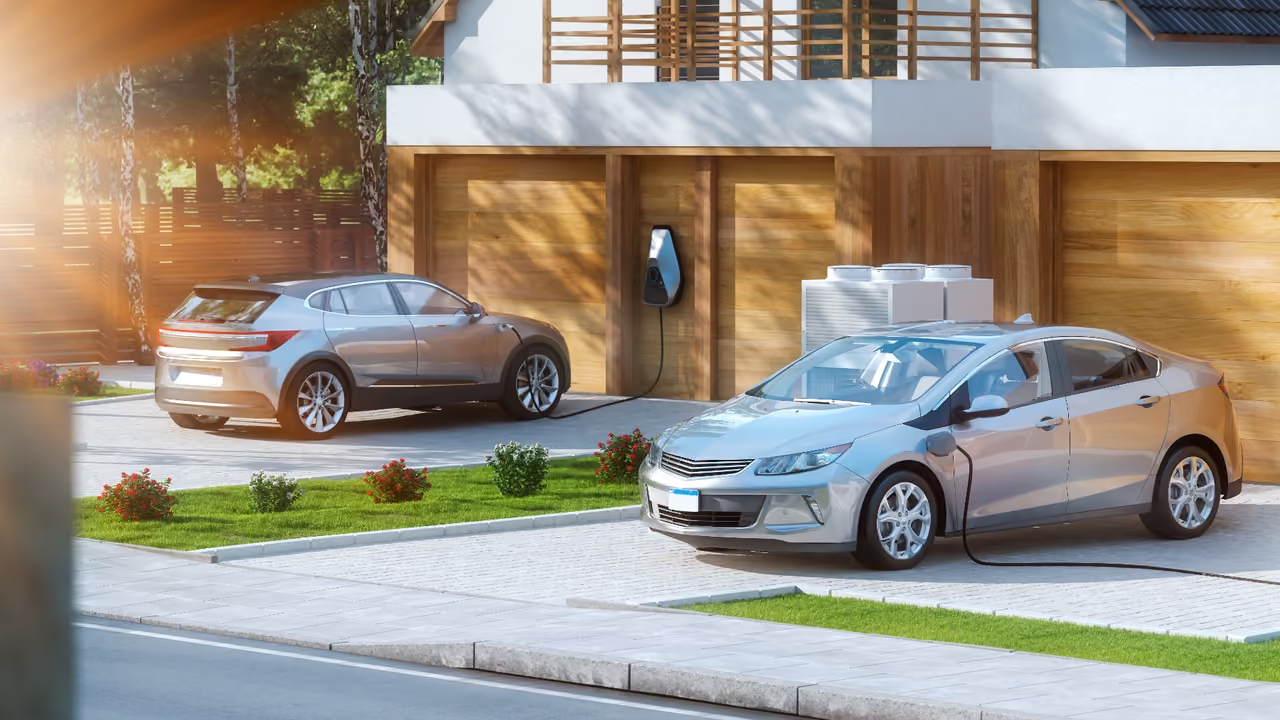
Walking through many city streets today, you’ll notice a subtle but profound transformation. Instead of the familiar din of engines and the steady stream of gasoline stations, urban landscapes are quietly evolving to accommodate electric cars. This shift is not just about swapping out engines; it’s about rethinking how cities function and how people move within them.
Charging Stations as the New Gas Stations Urban Planning Challenges
The rise of electric vehicles (EVs) is forcing city planners and developers to rethink a fundamental piece of infrastructure: refueling. Unlike gasoline cars that can fill up in minutes, EVs need charging stations that can vary widely in speed and placement. The old model of gas stations lined up at busy intersections is giving way to a more distributed and complex network of chargers.
Installing charging stations is no longer just a matter of convenience but a logistical challenge. Urban areas must integrate fast chargers in places where people spend time—parking garages, shopping centers, workplaces—while also ensuring equitable access across neighborhoods. This presents hurdles, especially in older parts of cities with limited space and outdated electrical grids.
Moreover, the installation of chargers demands significant upgrades to electricity infrastructure. Power grids must handle increased demand without risking outages or requiring expensive expansions. Cities are experimenting with smart grids and energy storage solutions to balance the load and make charging more efficient.
Impact of Electric Cars on Public Transportation Usage
Electric cars are reshaping how people think about commuting, and this has ripple effects on public transportation. On one hand, the allure of quieter, cleaner, and cheaper-to-run cars tempts some commuters to switch from buses or trains to personal EVs. This can strain efforts to reduce traffic congestion and emissions from dense urban cores.
On the other hand, many cities are integrating electric vehicles into their public transit fleets, from electric buses to shared electric scooters and bikes, creating a more sustainable transportation ecosystem. These options encourage multimodal commuting: a blend of walking, public transit, and electric micro-mobility that reduces reliance on private cars altogether.
Interestingly, the expansion of charging infrastructure also supports car-sharing programs and ride-hailing services that use electric vehicles, providing alternatives to personal car ownership. This dynamic shifts the urban mobility narrative from owning a vehicle to accessing transportation as a service.
Changes in Residential Energy Consumption Patterns
The electrification of transportation is not limited to public spaces and roads; it deeply affects homes and apartments as well. As residents install home chargers, often overnight, their electricity consumption patterns shift significantly. This can lead to higher residential energy bills and increased demand during evening hours.
Many utilities are responding by developing time-of-use pricing, incentivizing EV owners to charge during off-peak hours. Smart chargers that can delay or modulate charging based on grid demand are becoming critical to prevent overloads.
Additionally, homes equipped with solar panels and battery storage can become more self-sufficient, charging vehicles with renewable energy and reducing grid strain. This has sparked a new wave of interest in energy management systems that integrate home, vehicle, and grid interaction.
Future Prospects Autonomous Electric Vehicles and Smart Cities
Looking ahead, electric cars are poised to merge with other technological trends to create radically different urban experiences. Autonomous electric vehicles (AEVs) promise to change commuting entirely by offering driverless, on-demand rides that optimize routes and reduce traffic.
Smart cities will leverage data from fleets of AEVs, public transit, and infrastructure to orchestrate seamless transportation networks. Imagine traffic signals that adapt in real time to vehicle flows, parking that reserves spots dynamically, and charging stations that self-manage based on demand.
AEVs will likely accelerate the decline of private car ownership, turning streets into spaces for living and socializing rather than storage and traffic. This will prompt urban planners to rethink road design, parking requirements, and green spaces.
The integration of electric cars into the fabric of city life is more than a technological upgrade; it’s a catalyst for reimagining how we live, work, and move. As the lines between transportation, energy, and digital infrastructure blur, cities will continue to transform in ways we are only beginning to grasp.