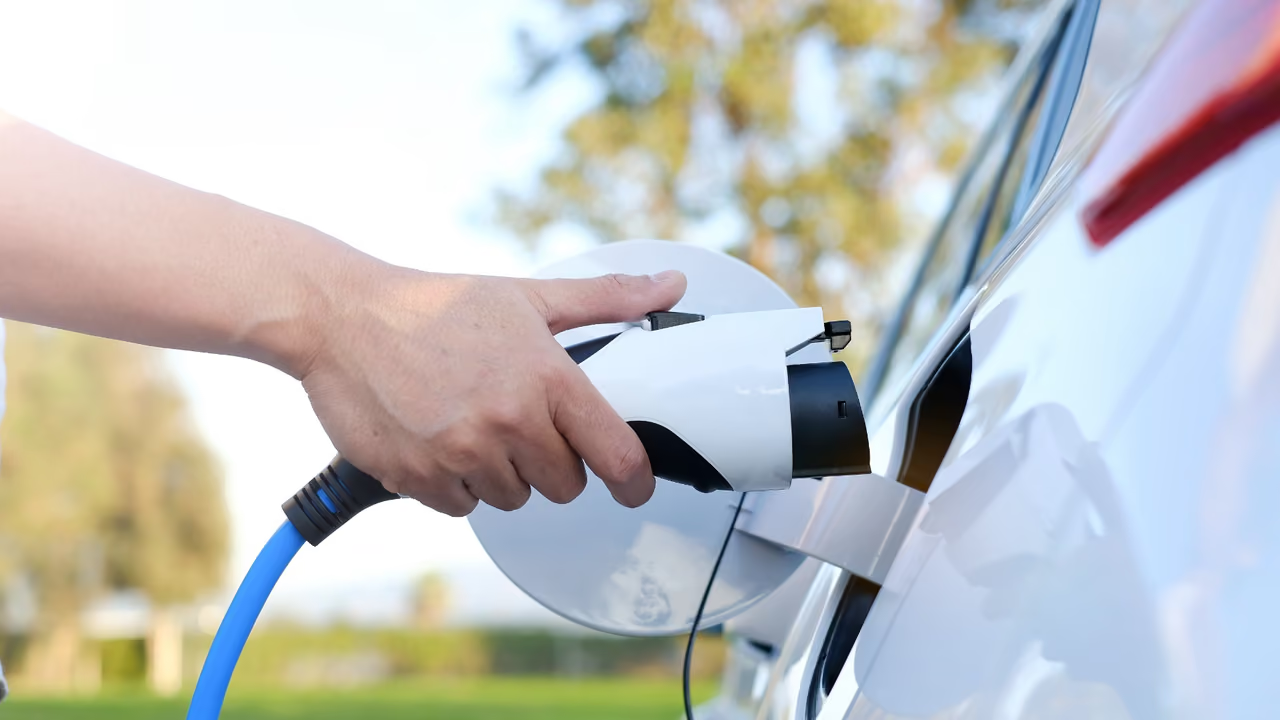
Electric vehicle (EV) charging has evolved far beyond simple plug-and-play. Today’s smart EV charging technology is reshaping how drivers consume energy, making charging not just more convenient but also significantly more efficient and cost-effective.
Understanding Smart EV Charging What It Is and How It Works
Smart EV charging refers to systems that manage the charging process dynamically, using software and hardware to optimize when and how an EV draws power. Unlike traditional chargers that deliver a constant flow of electricity regardless of external factors, smart chargers communicate with the grid, the vehicle, and even the homeowner’s energy setup to adjust charging speeds and timing.
At its core, smart charging involves:
- Communication: Chargers connect to networks via Wi-Fi, cellular, or other protocols to receive real-time data.
- Control: Based on data inputs—such as electricity prices, grid demand, or renewable energy availability—the charger modulates power delivery.
- Scheduling: Charging can be set to occur during off-peak hours or when renewable energy is most abundant.
This is enabled by software platforms that often integrate with mobile apps, allowing users to monitor and control their vehicle’s charging remotely.
Benefits of Smart Charging for Energy Efficiency and Cost Savings
The most obvious advantage of smart charging is financial. Electricity rates fluctuate throughout the day, with prices typically lower during off-peak times when demand is low. Smart chargers can delay charging until these cheaper periods, reducing the cost of powering an EV substantially.
For example, a driver who plugs in their car after work might not start charging immediately. Instead, the smart charger waits until late at night when electricity rates drop, then completes the charge before morning.
Beyond timing, smart charging also optimizes the rate of energy flow to avoid wasting power. This fine-tuned control means:
- Reduced energy loss during charging
- Less strain on home electrical systems
- Extended battery life through controlled charging speeds
By managing when and how much power is drawn, smart charging helps balance household energy consumption and can prevent demand charges—fees levied by utilities for peak electricity use.
Integration with Renewable Energy Sources
One of the most exciting aspects of smart EV chargers is their ability to integrate seamlessly with renewable energy systems like solar panels. When paired with home solar installations, smart chargers can prioritize using self-generated clean energy to charge vehicles.
For instance, during sunny midday hours, a smart charger can pull excess solar power that would otherwise go unused, feeding it directly into the EV battery. This reduces reliance on the grid for charging and maximizes the use of green energy.
Additionally, smart charging systems can work in tandem with home energy storage solutions, such as batteries, to store solar energy during the day and deploy it for charging overnight. This synergy between EVs and renewables accelerates the shift toward sustainable transportation and energy independence.
Future Trends The Role of Smart Charging in Grid Management
As EV adoption grows, the strain on electrical grids during peak charging times becomes a critical concern. Smart charging technology is poised to play a pivotal role in managing this load and stabilizing power networks.
Utilities and grid operators are increasingly leveraging smart chargers as tools for demand response programs. These programs reward EV owners for allowing their chargers to adjust power delivery based on grid needs, reducing peak demand and preventing outages.
Looking ahead, vehicle-to-grid (V2G) technology promises to transform EVs from mere consumers of electricity into active participants in energy ecosystems. V2G-enabled smart chargers can feed stored energy back into the grid during high demand periods, creating a two-way flow of power.
This evolution means EVs won’t just be transportation devices but also mobile energy assets that help balance supply and demand, integrate renewables more effectively, and reduce overall energy costs for everyone.